Online fraud / The full story
Three scams. More than $200,000 lost. Then came the “recovery.”
A wrong-number text. A LinkedIn investment “mentor.” A fake crypto exchange. When David tried to get his money back, another trap was waiting.
David used to think online scams were something that happened to other people.
Then, within a few months, three different approaches found their way into his life.
One began with a friendly text. Another arrived through a professional network. The last appeared when he was desperate to recover what he had lost.
The first time, he walked away. The next two times, he paid.
“Sorry, I think I have the wrong number.”
The first message seemed harmless.
The woman said she lived in Los Angeles. Her photos were attractive, and the conversation felt natural. What started as an apology for a misdirected text became an ongoing exchange about work, everyday life, and eventually, investing.
She told David she made short-term cryptocurrency trades with help from a relative. She sent screenshots of what looked like her profits.
David was cautious. He started with just $500.
A few days later, the account showed more than $580. He tried withdrawing $100. The money actually arrived.
That small withdrawal did something the screenshots alone could not: it made the setup feel real.
Then she encouraged him to put in $20,000.
Something felt wrong. David stopped before sending the larger amount. This time, he had escaped.
He did not know that the real losses were still ahead.
A polished LinkedIn profile. A string of winning trades.
A few weeks later, David received a LinkedIn connection request from someone presenting themselves as a financial analyst.
The profile looked professional: a work history, investment commentary, and plenty of connections.
They talked for more than a month. Then the “analyst” introduced David to a product described as short-duration crypto contracts.
Each trade lasted just 30, 60, or 120 seconds. He only had to choose whether the price would go up or down.
At first, the analyst supplied the trading signals. A $500 balance became $560. A $1,000 balance became $1,280. David appeared to make the right call six or seven times in a row.
The numbers on the platform kept rising.
“The more money you put in, the more you can earn.”
The pitch from the “analyst”
David began increasing his deposits: $5,000. Then $20,000. Then $50,000.
Eventually, he moved more than $180,000 out of his bank and retirement accounts. At one point, the trading platform showed a balance of more than $310,000.
He thought he had finally found a way to make serious money.
Then he tried to withdraw $100,000.
Customer support told him he first had to pay a “20% capital gains tax.” He sent $28,000.
Then came another demand: the account had supposedly triggered an “anti-money-laundering review.” To clear it, he would need to send a further $35,000 as a security deposit.
That was when David realized what was happening.
The platform could display whatever balance it wanted. The actual funds had already gone to cryptocurrency wallets controlled by strangers.
David had lost more than $200,000.
But the story was not over.
The next scam sold him something even more powerful: hope.
After reporting the loss, David searched online for ways to recover stolen cryptocurrency.
A few days later, a company contacted him. It claimed to specialize in blockchain asset recovery and said it had traced his money.
The people contacting him even knew which trading platform he had used and roughly how much he had lost.
For the first time in weeks, David felt hopeful.
The company said approximately $170,000 in USDT had been frozen. All he needed to do was pay a “judicial authorization fee,” and the funds could be sent back to his account.
The first fee was $3,000.
Then came “legal fees.” A “cross-border unfreezing fee.” A “wallet verification fee.”
David paid nearly $16,000 more.
When the company demanded another $9,800 as a “final processing fee,” he contacted actual law enforcement.
The answer was devastating: there was no $170,000 waiting to be released.
The supposed recovery company was another scam. Its operators may have obtained information about his earlier loss from other scammers—or may have been connected to the original operation.
The money he had paid to recover his savings was gone, too.
THE COMMON THREAD
Three different approaches.
The same demand.
In the first approach, a stranger built a personal connection. In the second, a professional-looking profile and a run of apparent profits built credibility. In the third, the promise of getting his money back offered hope.
They looked unrelated. That was part of what made them so dangerous.
Each approach led to the same place: trust the person on the other side of the screen, and send more money.
First came trust.
Then came the next payment.
RELATED REPORTING
The same tactics, in other cases.
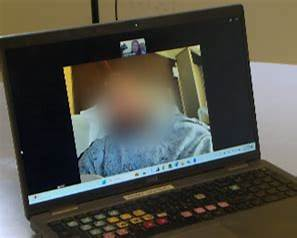
These reports cover separate cases: a trusted online contact, a convincing trading screen, and money that could not be withdrawn.
-
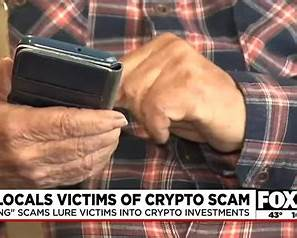
FOX5 Las Vegas news coverage. FOX5 Las Vegas
The platform looked real. The profits were not.
An FBI agent explains how fake trading platforms show growing balances to encourage more deposits, then demand fees when people try to withdraw.
Read the FOX5 report -

CBS News Baltimore news coverage. CBS News Baltimore
More than $3 million invested. Almost 80% in supposed gains.
A Maryland woman describes sending millions to a fake investment platform. The FBI explains why a successful small withdrawal can be part of the trap.
Read the CBS report -
ABC7 San Francisco
A WhatsApp contact called “Jessica.” A $1.2 million loss.
A Bay Area man identified as CY tells ABC7 how an online contact led him to a fake crypto platform. He lost three decades of savings, including money for his daughter’s education.
Read the ABC7 report
Someone you know may need to read this.
Back to top